What are you counting on?
A livable climate. Someone who'll care for you. Knowledge that gets passed down. Everything you're counting on, someone is building — and today's economy counts almost none of it.
What doesn't get counted doesn't get invested in; what doesn't get invested in gets depleted — that's why so much of what you rely on feels shaky.
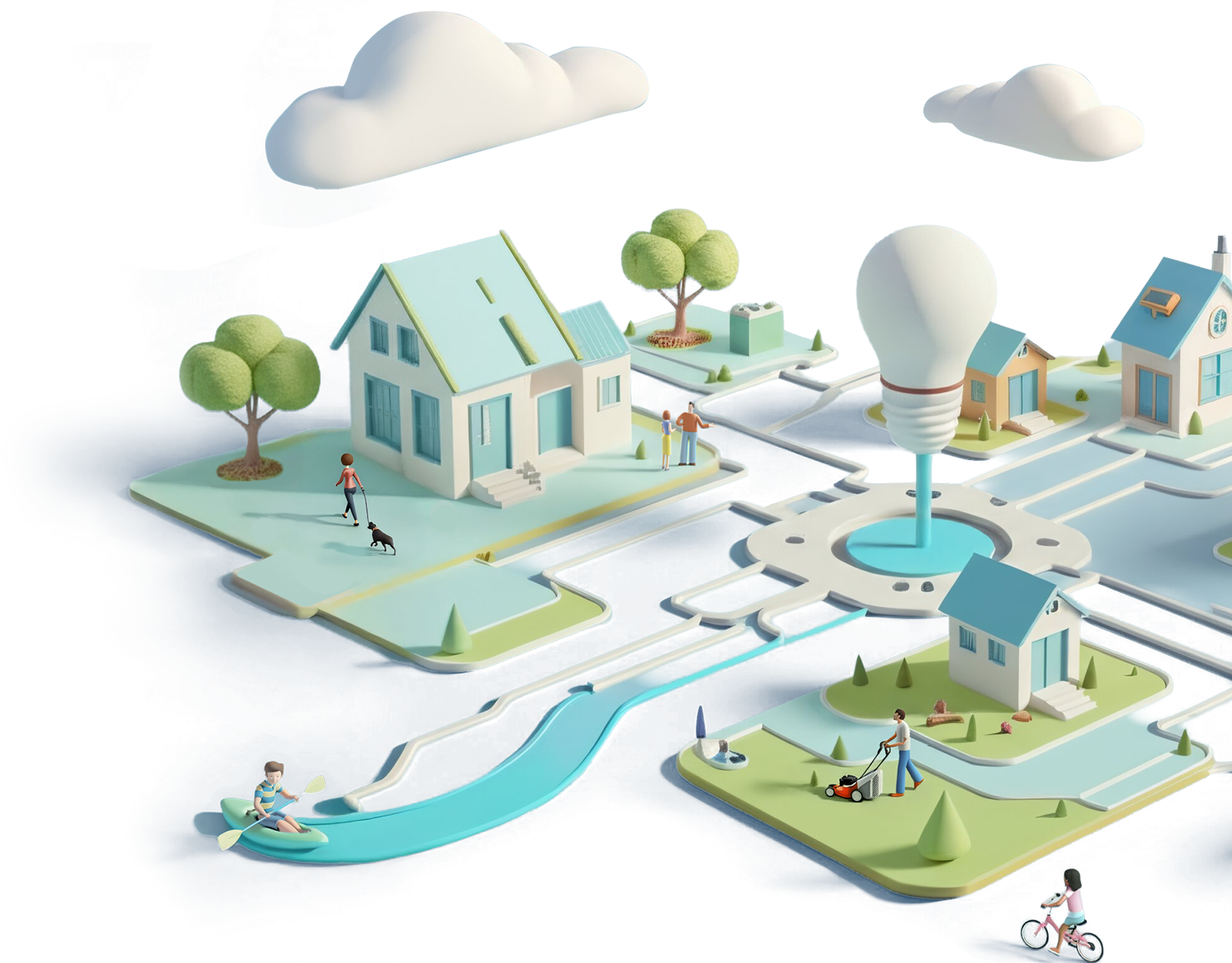
The only future that works is regenerative.
But we can't design value into a system we can't see.
of unpaid care work every year — none of it on the ledger.
In a regenerative system, value flows between all parts of the system, so nothing gets drained to grow something else.
But our economic model has only ever counted what's paid, priced, or produced. That leaves most people's contributions uncounted — the caregiving, the maintaining, the knowledge passed on, the communities held together — and it leaves the natural world off the ledger entirely.
And you can't design value to flow through parts of a system you refuse to see. Our rubric for the Builder Economy is how we see them. It's the map we use to decide what to build, and how.
Everything gets built with one of five materials — physical, digital, social, knowledge, natural. Most economies only count the first one. The Builder Economy counts them all.
Read the paper →Calling All Builders. Hard Hats Optional.
Every economy before this one decided that some people counted and others didn't. The Builder Economy starts from a different premise: everyone builds. Building is seven kinds of work, not one, and each is as real as pouring a foundation. Pick a verb to see the work it names.
{{ verb.meaning }}
As builders, here's what we're focused on.
At Regenerous Labs, our mission is to demonstrate the regenerative infrastructure a thriving world lives on. These five areas shape the work we take on and the people we collaborate with.
Builders in our ecosystem.
An innovation ecosystem needs more than one kind of builder, just like nature. Beavers who reshape the landscape and bees who cross-pollinate it.